
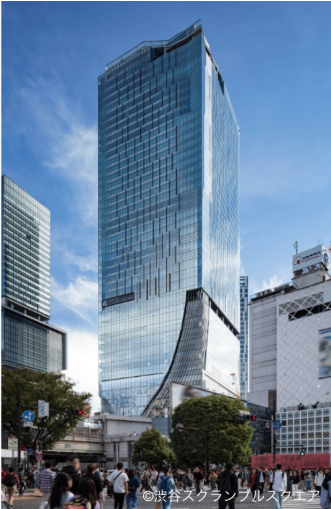
Shibuya Scramble Square is a large-scale mixed-use complex directly connected to Shibuya Station, where tens of thousands of people pass through every day. The 47-story building houses offices, a co-creation facility, retail space, and the SHIBUYA SKY observation deck, and is widely used as one of Shibuya's most iconic landmarks.
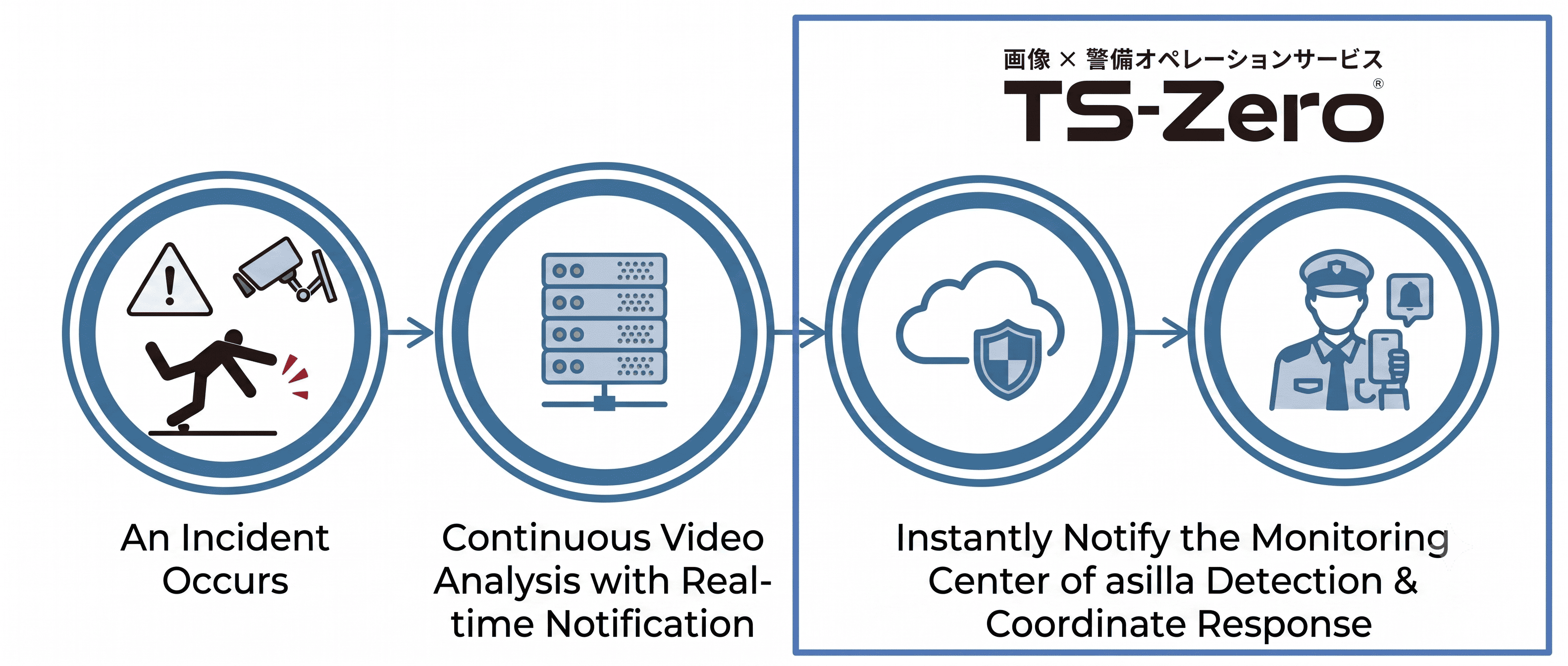
Tokyu Security Co., Ltd., which provides on-site security for the facility, operates "TS-Zero®," a security operation service built on the AI security system "AI Security asilla," working to streamline monitoring operations and raise the quality of its security services.
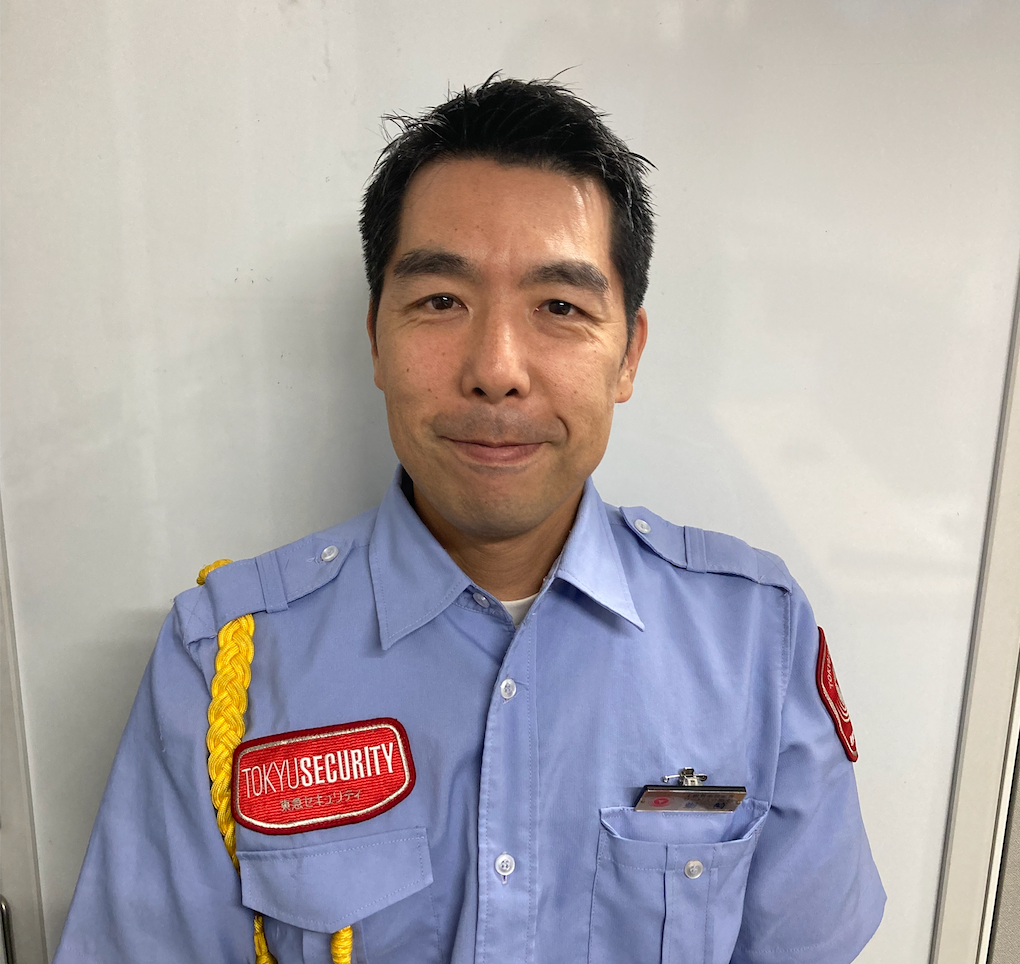
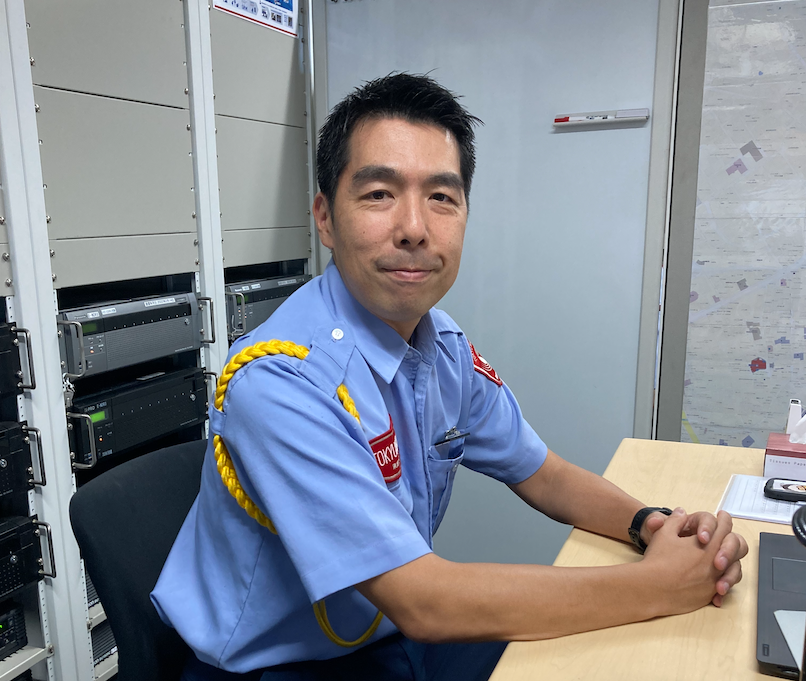
We spoke with Captain Toshiyuki Kakizaki of the Shibuya Scramble Square Security Team, Facility Security Service Department, Town Security Business Division, Tokyu Security Co., Ltd., about the background to the deployment, how the system is used on-site, and his outlook for the future.
— As the person responsible for security at Shibuya Scramble Square, what challenges were you facing?
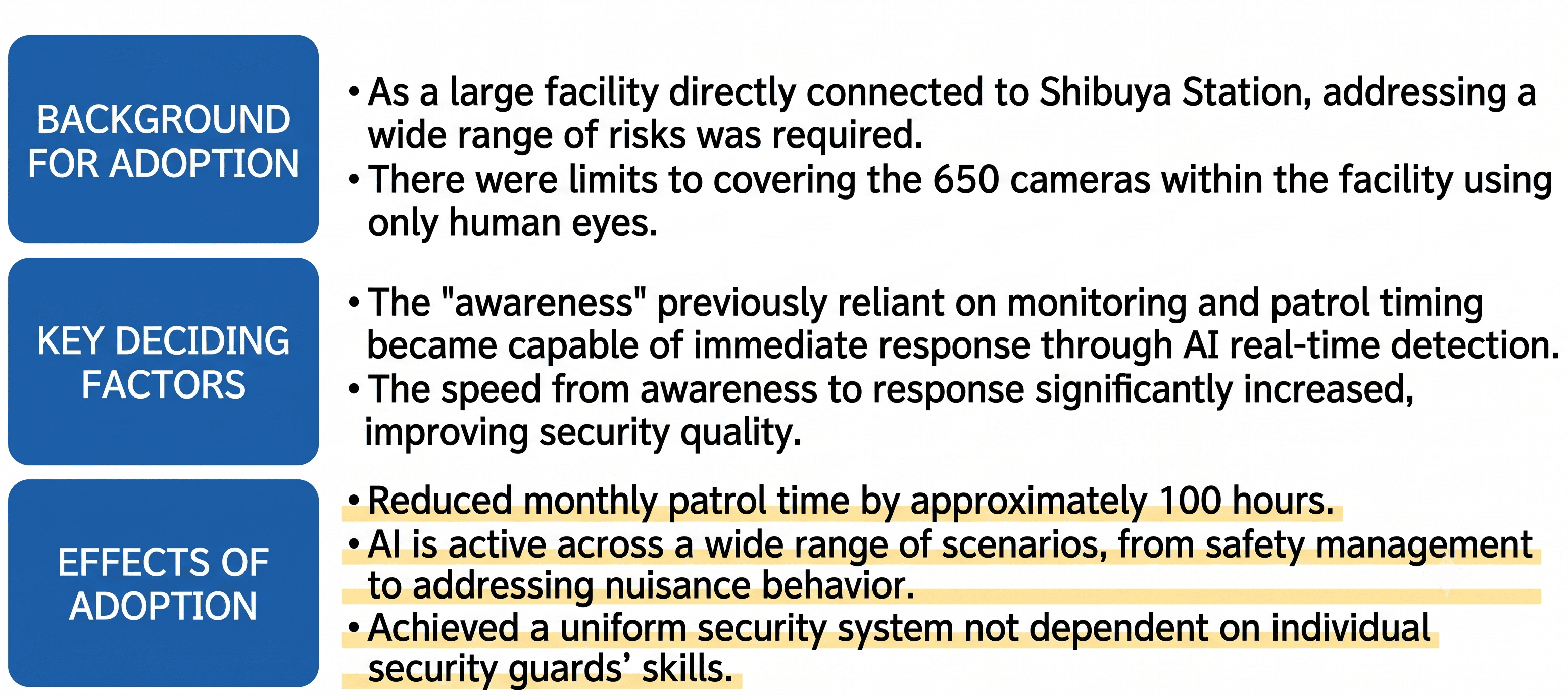
Capt. Kakizaki: Because Shibuya Scramble Square is directly connected to Shibuya Station, we welcome a wide range of visitors every day — office workers, shoppers, and tourists from Japan and abroad. With such a diverse mix of visitors, the security team has to be prepared for an equally wide range of risks.
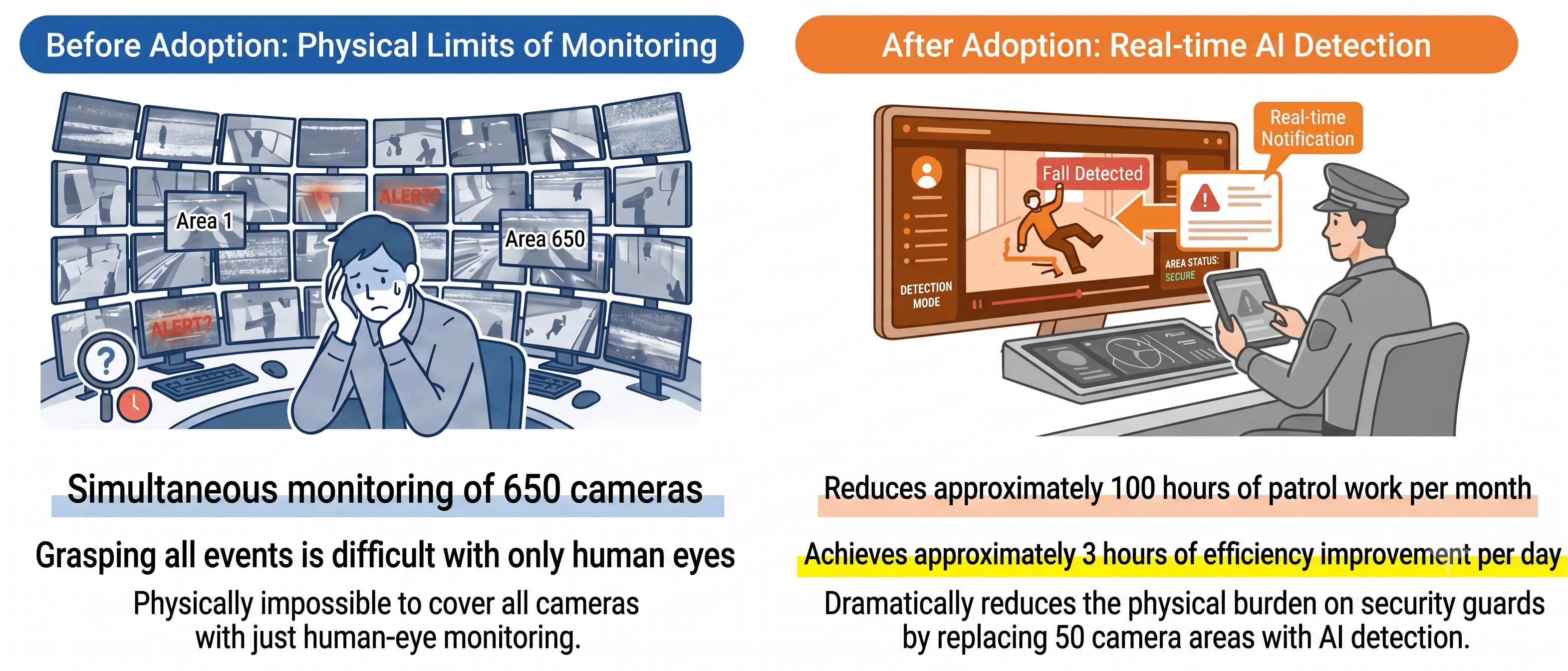
To catch those risks as early as possible, the building is equipped with 650 cameras. But of course, it is simply not possible for human eyes alone to cover every camera. Even if someone happens to be watching the monitors, actually witnessing the exact moment someone falls is quite unlikely.
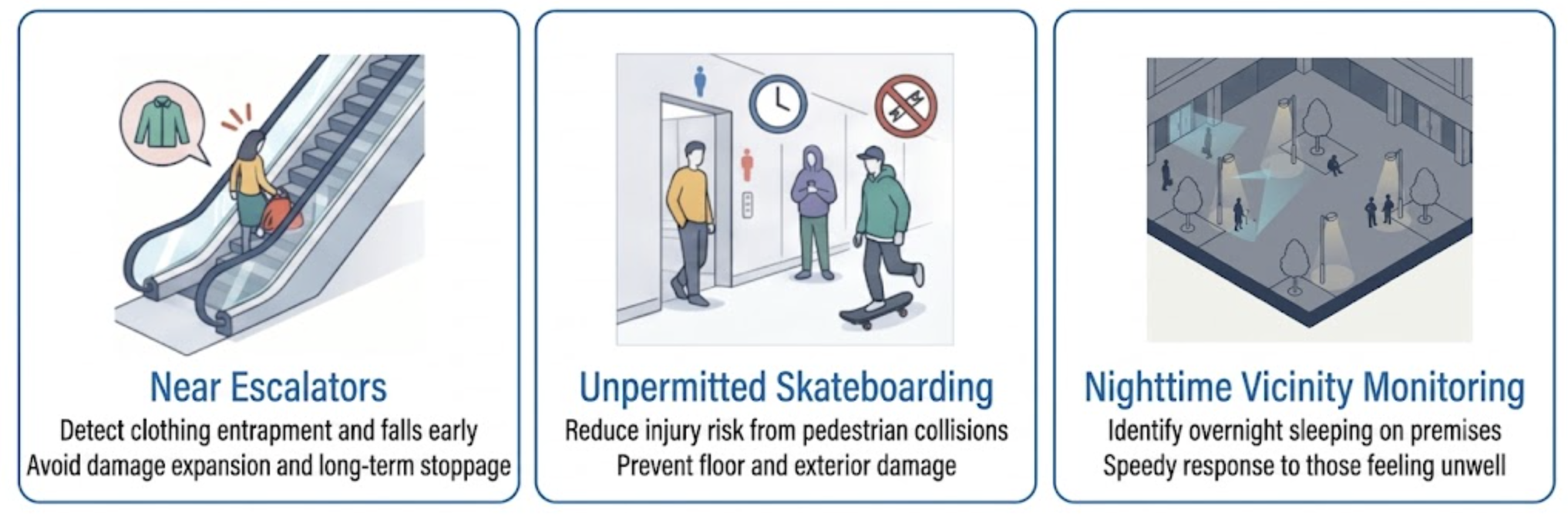
There are also many situations across the facility that require attention: falls on escalators, people lingering or sitting down for long periods near entrances, congestion around elevator lobbies, and so on. We felt we needed a mechanism that could both streamline monitoring operations and improve the quality of our security at the same time.
— That led to the deployment of the AI security system "AI Security asilla." How was it received on the ground?
Capt. Kakizaki: Until then, our response was inevitably reactive: something would happen, we would receive a report, check the cameras, and then rush to the scene. We had plenty of cameras installed, but felt we were not making full use of them. So a system in which AI analyzes the video and detects incidents in real time was something the field team had high expectations for.
Another big plus was that we could use our existing equipment as-is, without installing new cameras. At Tokyu Security, we have branded this framework — combining asilla's AI detection with on-site response by security officers — as "TS-Zero." Put simply, the AI raises an alert saying "an anomaly has been detected," and a security officer verifies it and responds on-site. TS-Zero establishes that entire flow as a single service.
— After you actually started using the system, what changes did the team notice?
Capt. Kakizaki: The biggest change was that our response speed improved dramatically.
For example, in the past, even if someone was feeling unwell in a sofa area, we could only notice it if someone happened to be watching that particular camera, happened to pass by on patrol, or was alerted by another visitor. Now, the moment the AI detects something unusual, an alert is raised, so we can immediately check the footage and head to the scene.
And this is not limited to sofa areas — the same is happening in many situations across the facility, such as falls near escalators or people sitting down at entrances. The AI's alerts let us first become aware that "something is happening." From there, we check the footage, judge whether a response is needed, and if so, a security officer heads to the scene.
The fact that this "awareness → judgment → response" cycle has become dramatically faster is something you can truly appreciate only when you are on the ground.
— Following the pilot, full-scale operation began in April 2026. What concrete results have you seen?
Capt. Kakizaki: There have been many, but the easiest one to point to is the reduction in patrol hours. Of the 650 cameras in the facility, 50 are currently connected to asilla. These 50 cameras cover high-traffic areas that we previously patrolled intensively. With the AI now covering these areas around the clock, we have been able to reduce patrol time by roughly three hours per day — about 100 hours per month.
Patrols involve a lot of walking and place a real physical burden on security officers. Any reduction in patrols is a very meaningful improvement for the team.
— A 100-hour monthly reduction in patrols is a significant result. In what specific situations is the system being used?
Capt. Kakizaki: Broadly speaking, in two areas: safety management and responding to nuisance behavior. On the safety management side, the AI catches high-urgency events in real time, such as falls inside the building or entrapment incidents on escalators. People lingering or sitting down near entrances also cannot be overlooked, as they may be feeling unwell. In every case, the flow is the same: when an alert comes in, we first check the footage, judge whether a response is needed, and head to the scene if necessary.
— And what about the second area, responding to nuisance behavior?
Capt. Kakizaki: We do get people riding skateboards in prohibited areas of the facility. There is a risk of injury from collisions with pedestrians, and it can also damage the floors and exterior fixtures. We also see cases where people who have been drinking fall asleep on the premises late at night.
The AI detects and notifies us of this kind of nuisance behavior as well, so instead of depending on patrol timing as before, we can now grasp the situation in real time and respond. The fact that the AI helps not only with safety management but also with these nuisance issues is very reassuring for the field team.
— The system is clearly being used in a wide variety of situations. Looking back overall, where do you feel it has made the biggest difference?
Capt. Kakizaki: What I can say across the board is that with the AI monitoring continuously, we can cover what human eyes alone could not, while concentrating our limited personnel on higher-priority work. There is a limit to what humans can see, and the AI fills that gap. I see it as an extremely positive system.
Also, because the AI handles the "noticing" part, our response no longer depends on the individual skill or experience of each officer — whoever is on duty can respond at the same standard. That is a major benefit.
— Could you tell us about your plans for future use and your expectations for Asilla?
Capt. Kakizaki: We currently have asilla deployed on 50 of our 650 cameras. Going forward, building on the results so far, we want to explore more detailed use cases, including expanding the number of connected cameras. Given the results we have achieved with just 50 cameras, we expect that widening the coverage will strengthen our overall security posture even further.
Through the use of AI, we aim to build a structure that allows us to devote more resources to work that only people can do.
I believe AI holds enormous potential for the security industry. By having AI fill in where human eyes reach their limits, we can make operations more efficient without compromising the quality of security. We intend to keep deepening our collaboration with asilla and continue protecting the safety and peace of mind of everyone at Shibuya Scramble Square.
"AI Security asilla" Officially Deployed at Shibuya Scramble Square — Working with Tokyu Security's "TS-Zero®" to Realize AI-Driven Security DX: https://jp.asilla.com/post/introduction-shibuya-scramblesquare-20260427

.png)