Sapporo Station General Development Co., Ltd. operates Sapporo Stellarplace and Apia, massive terminal facilities connected to JR Sapporo Station. As part of their DX initiatives for the upcoming large-scale station redevelopment, they deployed AI Security asilla.
We spoke with Mr. Takahari, who oversees the asilla deployment, about the background, implementation, and results.
.png)
.png)
Mr. Takahari:
Our primary concern is the shortage of security personnel. Relying solely on human patrols and monitoring has clear limitations, especially considering the upcoming redevelopment. We needed to standardize and enhance safety management using AI rather than depending on individual experience and intuition. Additionally, increasing camera numbers alone cannot improve monitoring capabilities beyond human limits.
Several years ago, we completed a transition from analog to IP cameras—not just a hardware upgrade, but a forward-looking infrastructure investment for future AI and data-driven DX across the facility.
.png)
In fact, we completed the replacement of our analog cameras with IP cameras a few years ago. This was not just a simple equipment upgrade, but a proactive infrastructure investment with an eye toward future facility-wide digital transformation (DX) leveraging AI and data. Driven by labor shortages and the need for better system utilization, we have taken a step-by-step approach, starting from camera digitalization and leading up to AI implementation, always with DX in mind.
Asilla:
In other words, introducing AI was an inevitable step within your DX journey, and you aimed to establish an AI-driven security system to resolve on-site challenges.
Mr. Takahari:
Yes, exactly. We wanted to maximize the potential of our IP camera digital foundation while incorporating automated AI monitoring to achieve both rapid initial response during incidents and improved operational efficiency.Because the AI detects and alerts us to early signs or the "immediate aftermath" of an incident, our response speed has improved dramatically. Furthermore, since AI monitoring replaced some of our physical patrols, we successfully optimized our patrol workflows. As a result, we can now focus our limited personnel on higher-priority tasks.

Mr. Takabari:
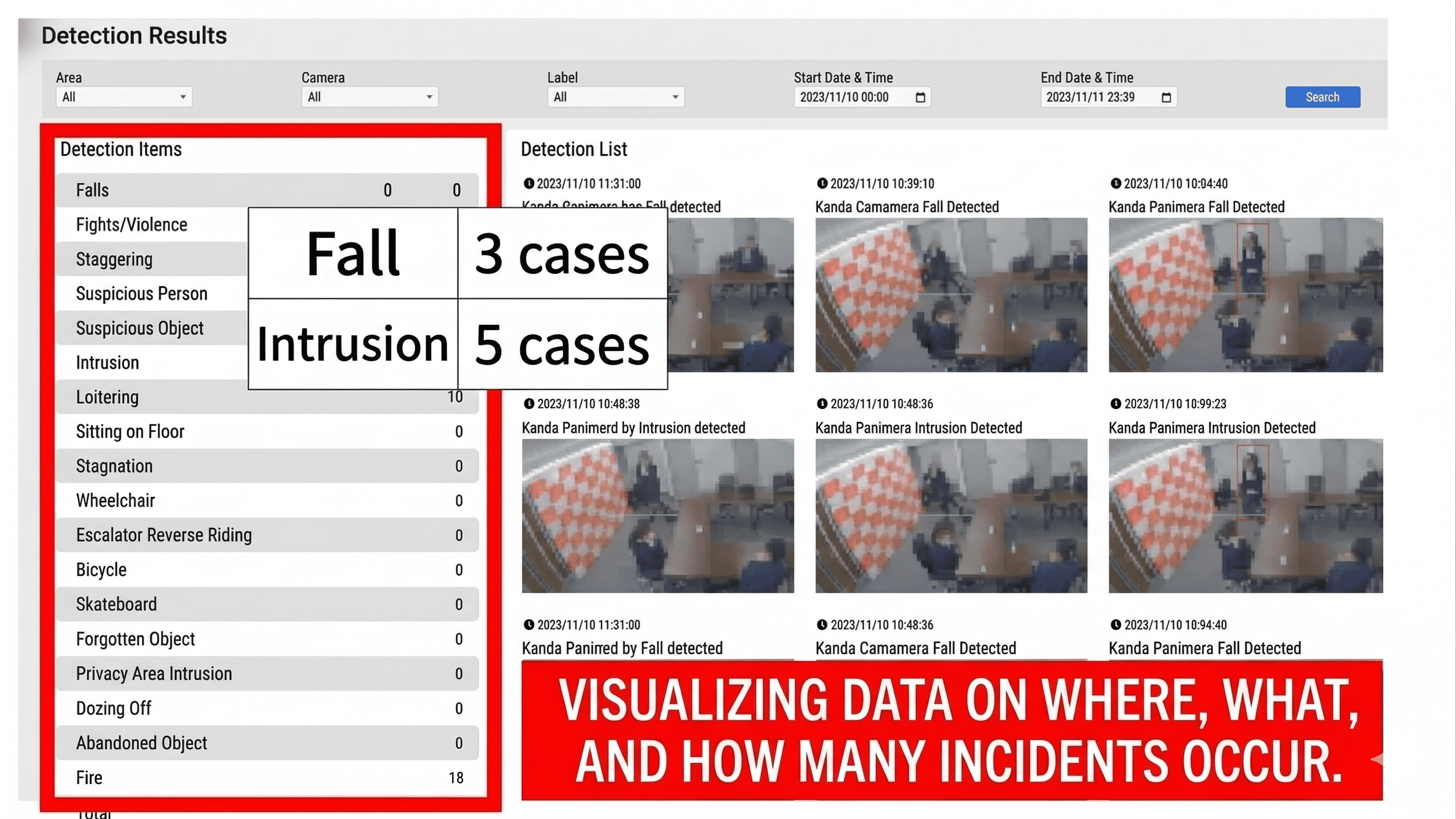
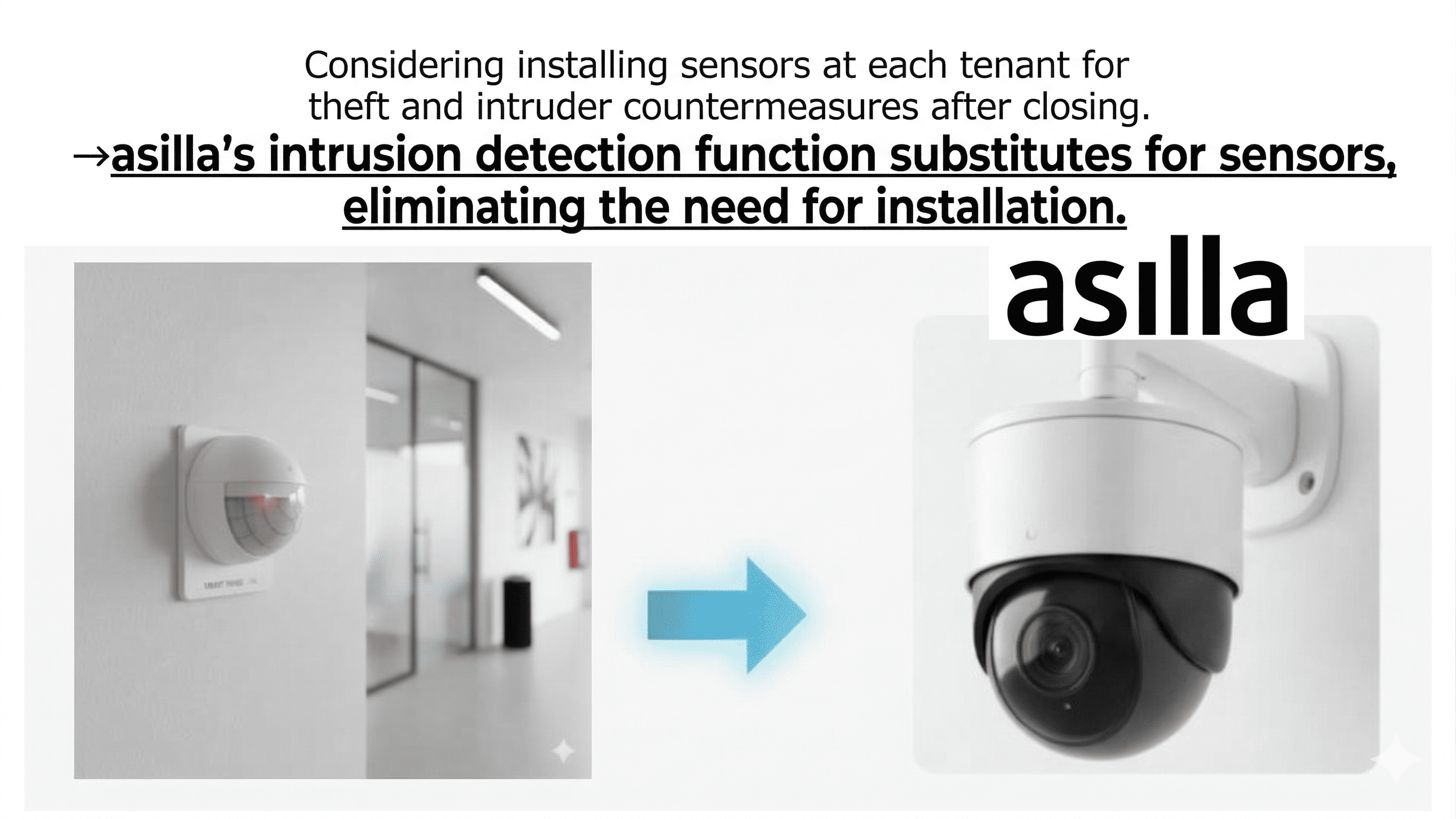
One is that, while facing the challenge of personnel shortages, the appeal of Asilla was being able to introduce security functions at a relatively low cost, and being able to effectively utilize the human flow data analysis function. Another is that it had functions directly linked to equipment cost reduction and operational man-hour reduction. Not limited to reviewing patrol operations, for example, we had previously considered installing physical sensors in each tenant space as a countermeasure against intrusion and theft after the tenants' closing time. However, now Asilla's entry detection function fulfills the role of those intrusion sensors instead. Due to this, the fact that the cost required for sensor installation is no longer needed is a big merit. Also, by intentionally letting the entry detection function detect, we leave it as a record and utilize it for strengthening security and for new facility operations (especially in the nighttime).
Asilla:
In addition to the partial reduction of patrol duties, you have also succeeded in reducing equipment costs, haven't you?
Mr. Takahari:
Yes. By utilizing the AI's entry detection function and replacing the areas that were monitored by physical sensor devices with AI cameras, we have also succeeded in indirectly lowering the costs of sensor devices. I feel potential in the point that it does not simply strengthen security, but also leads to the reduction of equipment costs.
Asilla:
I hear that in addition to the efficiency improvement and sophistication of security, you are also very proactive in the utilization of human flow data.
Mr. Takahari:
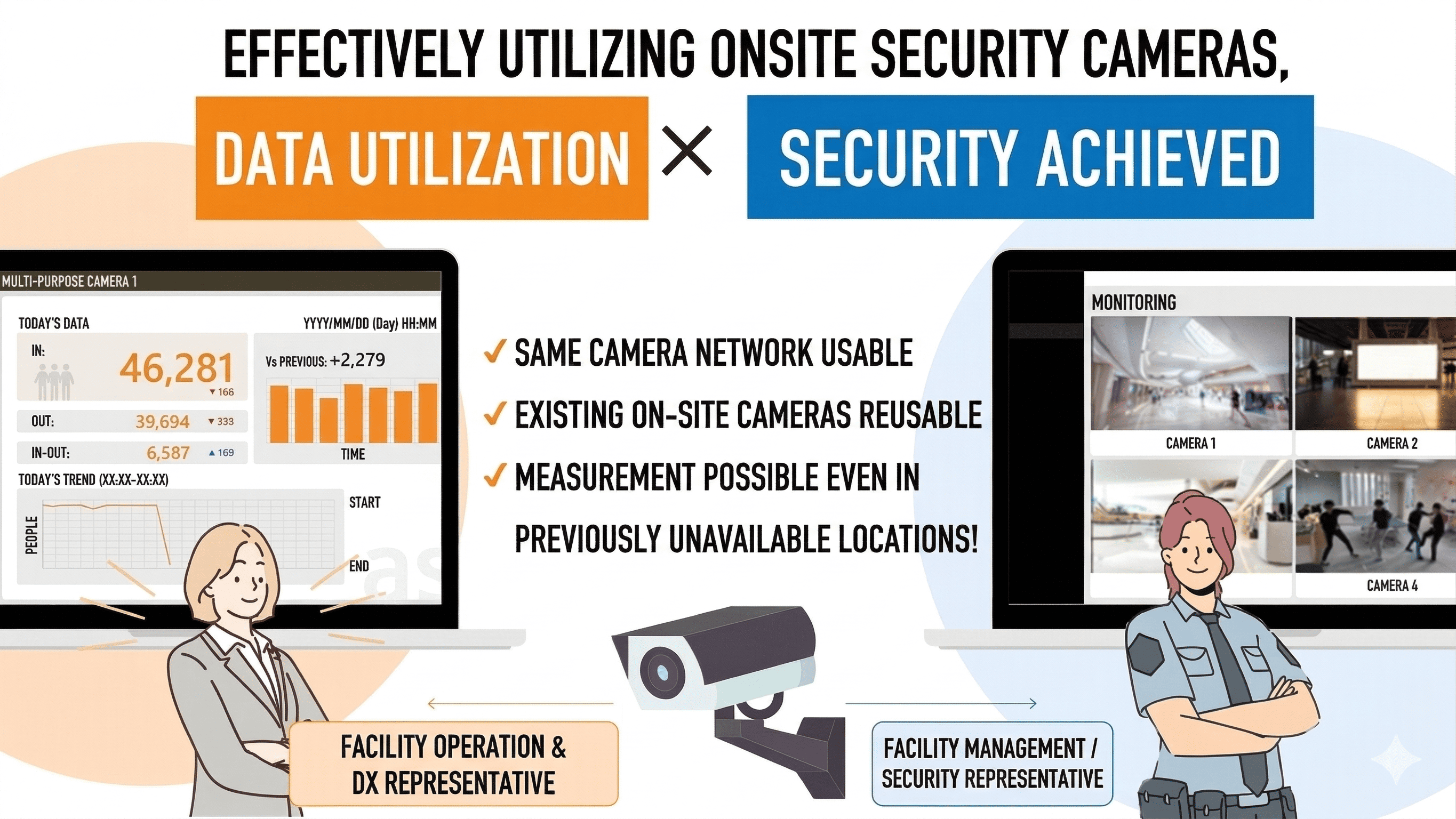
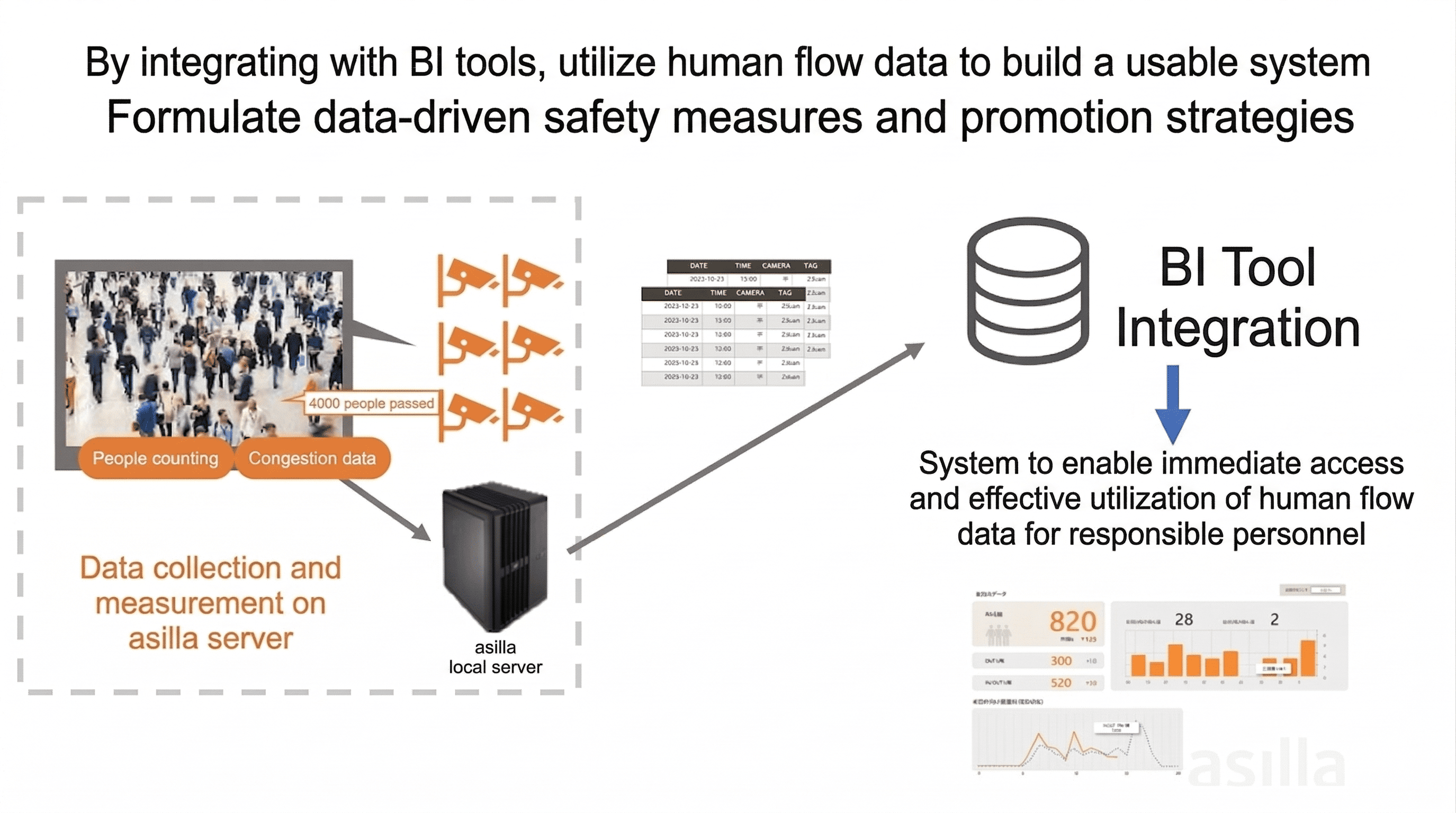
We are conducting asilla's people counting with a total of more than 150 cameras at Sapporo Stellar Place and Apia. This human flow data is not merely viewed on the Asilla screen, but is linked to our company's BI (Business Intelligence) tool. Through this, we have constructed a system where the person in charge can access the data at any time, analyze it, and effectively utilize it.
Mr. Takahari,
Given our facility's direct connection to the station, ongoing redevelopment construction means that pedestrian traffic routes change frequently. By continuously monitoring foot traffic data, we can "simulate pedestrian flow in advance while planning guidance methods" the next time routing changes are required.
Furthermore, we are effectively utilizing foot traffic measurements during peak seasons, such as sales periods and Christmas. This data serves as a solid foundation for evaluating safety protocols, promotional strategies, and phased closing procedures. Being able to present objective numerical evidence, rather than relying solely on past experience, greatly strengthens internal consensus and buy-in.
Asilla:
So, you are promoting DX (Digital Transformation) for the entire facility, with AI as 'part of the operations.
Mr. Takahari:
Exactly. Not only conducting security, but by combining AI with the infrastructure of IP cameras, we can make Asilla permeate as 'part of the operations' in areas that cannot be fully utilized just by replacing equipment, and I believe we can realize comfortable and secure facility operations for our customers.
Asilla:
Could you tell us about your future outlook?
Mr. Takahari:
This year we expanded to Apia, enhancing facility safety. We are now planning deployment in redevelopment facilities, including camera placement optimized for AI security. Asilla's development speed is impressive—they genuinely think alongside us about our facilities. Our security staff now proactively think about how to use the system. We look forward to deepening this collaboration for even more advanced safety management.
Asilla:
Thank you very much for your valuable talk today. I am looking forward to the future evolution of Sapporo Station General Development.